b.smart
NUMBER №
mediacast about small business
Is this your first time here?
This b.smart episode can be tailored to your specific needs—select one of these display options from the bottom menu of the site:
Each option will convey the same meanings, but with a different twist – so that it all becomes as relevant and interesting as possible for your type of business 🙂
You can spend a long time thinking about what's going on and who's to blame - or you can start doing something and figure it out as you go
what are we talking about?
The topic of this episode is "What Should a Small Business Do When Everything Around You Is Unclear?" When clarity fades, businesses that rely on their brains are especially eager to understand everything first and then act. They need to figure things out, build a picture, wait for a logical foundation, and only then make decisions.
But uncertainty doesn't always lend itself to static analysis. It often diminishes in the process—when you begin to experiment, ask questions, test hypotheses, and notice how reality responds to your steps. This movement reveals nuances that cannot be deduced by reflection alone.
Yes, movement without complete clarity doesn't produce a perfect logical model. But it almost always provides an understanding of the next step and reduces internal tension. This episode is about how to think and act in a small business when clarity doesn't come first, but movement is still necessary.


SUPER TIP
If there is uncertainty and fog around you, don’t stand still. Move.
This is how new solutions are found >>>
STORY
The consultant's morning began with silence.
Not the kind of work silence where everything is under control, but the kind where you start counting the minutes.

The phone was lying nearby, its screen blank. No emails, no messages, no "let's think about it some more." Just emptiness.
Just a week ago, his schedule had been jam-packed. Calls, reviews, sessions. People nodded, agreed, said they were "really responsive." And then, it was as if someone had turned off the lights. The consultant replayed the recent conversations in his head and caught himself thinking that almost all the clients had left the same way—"I need to digest it all."
By lunchtime, the familiar urge to rewrite something arose. The website, the service description, the presentation. He wanted to make the wording more precise, more clever, more persuasive. But instead, he closed the laptop and went for a walk. Just like that. Without a goal.
On a park bench, he overheard two people talking. One was explaining at length why he couldn't make a decision. The other listened and suddenly said calmly, "I don't understand what exactly you're afraid of losing." The conversation ended, but that phrase stuck.
Returning home, the consultant opened not the website, but client notes. And for the first time in a long time, he wrote not about benefits and methods, but about the fears he heard between the lines. The next day, he asked this question to one of his "thinking" clients. He fell silent, and then unexpectedly agreed to work with him.
The phone didn't ring off the hook again. But the silence no longer frightened him.
It became a place where the right questions sometimes arise.
BLITZ SURVEY
BLITZ SURVEY
When something in business stops working as usual, many people get scared. What about you?
At this point, businesses often operate not out of calculation, but out of habit. Consider what's most important to you right now.
***
My strategic business plan is based on winning the lottery jackpot.
The alternative plan involves reincarnation in the family of a major oligarch.
***
ACADEMY

How Your Business Is Losing Money Even When It Seems Like You Have It Under Control
An analysis of typical leaks of attention, time, and money in small businesses – and the reasons why they are difficult to notice from within the process.
OTHER ARTICLES (3)

Why do people agree but not buy?
On the reasons why people understand the proposal, agree with the arguments, but still postpone the decision and do not become clients

Small steps that unexpectedly yield big results
About small changes in your mini-business that are often underestimated, but can significantly impact demand, response, and a sense of sustainability

Why copying competitors rarely works, even if they are successful
When something stops working, the gaze almost automatically shifts to those who are successful
COMMON MISTAKE
And you, too, try even harder where it no longer works?
When habitual actions stop producing results, the first reaction is to invest even more in them. Strengthen. Deepen. Push further.

What's the problem? Sometimes it helps
In the expert business, this manifests itself like this:
• If services are selling poorly, even more benefits are added.
• If clients are hesitant, explanations are given in more detail.
• If response is declining, the argumentation becomes more complex.
It seems logical: if the value lies in knowledge and experience, then they need to be demonstrated even more.
But at this point, the problem is often no longer in depth.
It's that the format and angle of delivery no longer align with the client's actual needs.

What does this actually lead to? You might be surprised
From the outside, it looks like the person is doing a lot.
From the inside, it feels like their efforts aren't converting into results.
Thoughts gradually creep in:
• "The market has become more complex"
• "Clients aren't ready"
• "The method needs further refinement"
But in reality, something else is happening: what's being strengthened isn't what the market currently requires.

How to do it better. It seems like this could be used in your business too.
When a familiar format stops working, it's helpful not to go too deep, but to shift gears.
• Don't over-explain—but check what exactly isn't being understood.
• Don't refine the product—but see where the client is losing interest.
• Don't reinforce the old—but carefully try a different format, angle, or delivery.
Sometimes a small step aside is enough to re-engage. Not because it's become "smarter," but because it's become slightly different.
ADVERTISING

MORE DETAILS
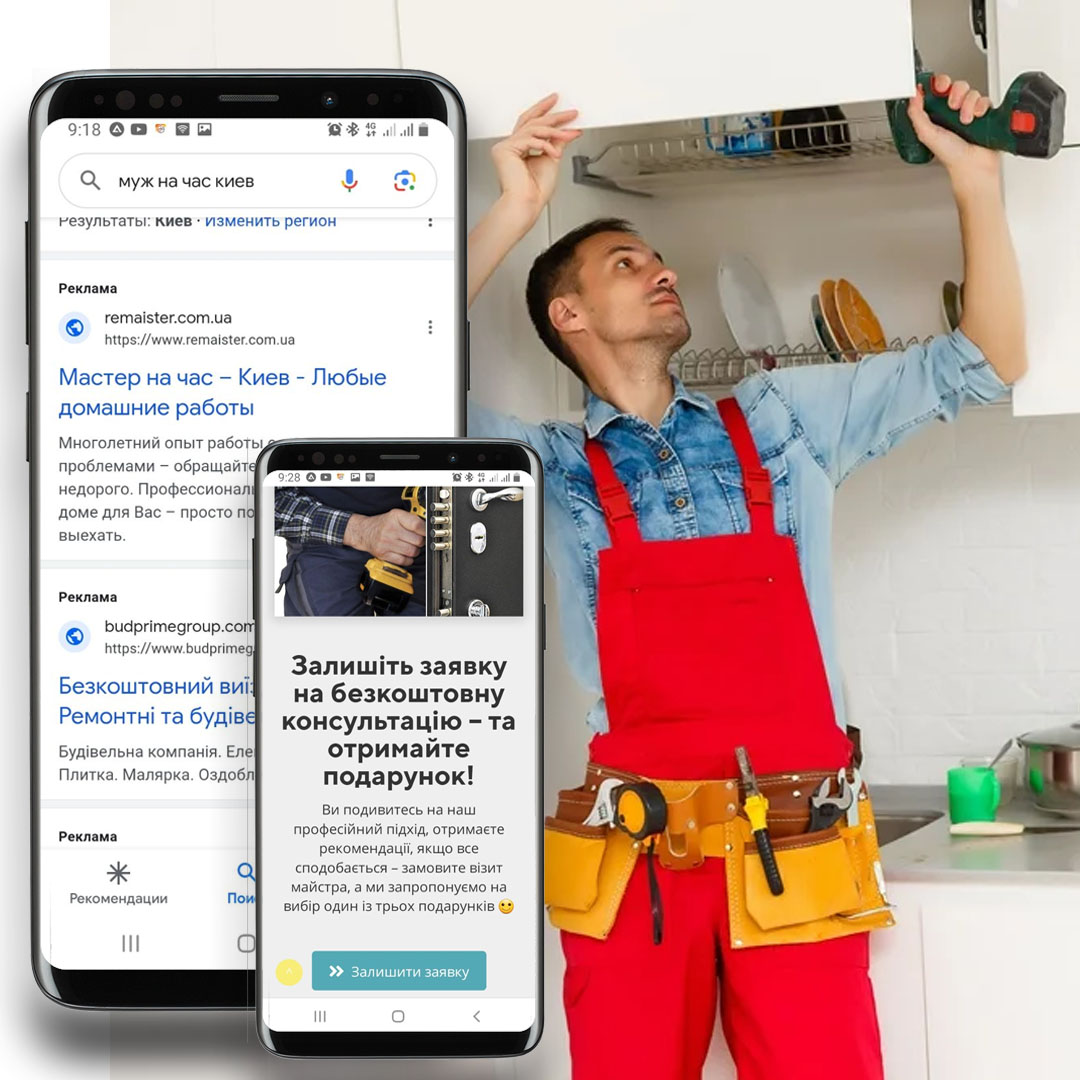
Every day I see how my sites with advertising bring new customers to my customers - in a wide variety of business niches! Do you want the same? Let's work on it: today-tomorrow Promotion!
Why is it so important to have an effective site? Because advertising money should pay off as much as possible, right? So as not to pour budgets down the drain, but to "cling" to each site visitor, turning him into a buyer.
What is good about Google? Because most people are looking for solutions to their problems there - and you can get "hot" customers ready to order. Working with them is a pleasure!
What are good about Facebook and Instagram? Because there you can "hook" those who are not yet looking for you on Google, but are already ready to want your services. Facebook algorithms are able to find ideal customers for any business, it has been proven many times!
Learn more, see examples for different business topics, try a free test drive! If you like it, become my client 😊
STARTUP IDEA
How much does a client's "I'll think about it" cost?
About pauses that seem harmless, but actually cost businesses more than mistakes and failures – and how to make money from them.
In small businesses, pauses are rarely considered.
Rejection is immediately noticeable. It's easy to register and accept. A pause, on the other hand, appears neutral. It doesn't create conflict and leaves a sense that the process is still ongoing.
The client listened to the proposal, asked a few questions, nodded, and said, "I need to think about it." The conversation proceeded calmly, without tension. No one was upset. That's why, at this point, questions about what exactly just happened and how much it cost almost never arise.
A pause seems free.
But this is an illusion.
During a pause, the decision begins to unravel. The person returns to their own reality, where other tasks, doubts, and distractions arise. Even if the need remains, the momentum weakens. The longer the pause, the less likely the decision will be made.
Almost no one considers this process.
Not because it's unimportant, but because it's invisible.
This is where the idea of a startup, built around one simple question, emerges: how much does "I'll think about it" really cost.
This startup doesn't sell advertising, doesn't refine copy, or optimize funnels. Its task is simpler. It makes visible the pause between interest and decision. It shows exactly where the decision slows down, at what stages anticipation becomes critical, and how many potential deals are wasted not in rejections but in procrastination.
Implementation can be extremely simple. The moment of interest and the moment of decision, or lack thereof, are recorded. Over time, the business sees not the number of "I'll think about it," but their value. It sees where pauses are short and safe, and where they stretch out and become too costly.
The value here isn't in analytics for the sake of numbers. The value lies in a shift in perspective.
Businesses stop guessing and begin to see a process that was previously only intuitive. The pause ceases to be a void and becomes part of the customer journey, one that can be addressed consciously.
Why this formula is promising.
Everyone has pauses. At a coffee shop, between "I liked it" and "I'll come again." At a consultant, between the conversation and payment. For a service, it's between a request and an action. For a store, it's between a shopping cart and a purchase. But almost no one perceives the pause as an independent zone of losses and opportunities.
When the pause becomes visible, the nature of decisions changes. It often turns out that growth doesn't require new products or significant effort. It's enough to understand what exactly happens during this gap and why a solution isn't maturing.
Many startups promise growth.
Sometimes, however, growth begins elsewhere. With the business stopping losing money where it previously didn't even notice.
And the word "I'll think about it" ceases to be a polite formality and becomes what it always was: an expensive pause.
And this means that such a startup will definitely find interested customers.
Show more
Hide

What is more important at the start – an idea or the ability to act?
The idea is important. But movement is more important.
A good idea without movement remains a beautiful thought.
And movement, even with an average idea, begins to create form.
When a person takes action, feedback appears. Unexpected observations, strange reactions, new approaches emerge. What couldn't have been conceived in advance begins to emerge in the process.
Often, it's movement that makes an idea better.
It grows, changes, and becomes more precise.
Therefore, at the outset, it's not the genius of the concept that's valued, but the willingness to move forward, even when the picture isn't yet fully formed.
Is it necessary to quit your main job to launch a startup?
No. And that's the good news.
Most sustainable startups don't start with a sudden leap, but with a cautious step aside. Work provides support, rhythm, and a sense of security. A startup, on the other hand, initially asks for attention, not sacrifice.
Starting in parallel means allowing yourself to make mistakes without disaster. Test ideas, observe reactions, try out formats. Sometimes it's precisely the lack of pressure to "this is my only chance" that makes the first steps calmer and more precise.
Leaving your job isn't starting a startup.
It's just one of the possible stages that comes when it becomes clear why you need one at all.
How is a startup mindset different from a small business or paid employment mindset?
Startup thinking isn't about scale or risk.
It's about an attitude toward uncertainty.
In a hired job, people often expect clear objectives.
In a small business, they strive for stability.
In startup thinking, they accept that clarity may come later.
This is a mindset in which you don't necessarily know the answer right away.
You can take small steps, observe, and adjust your course.
And importantly, you can learn this without even launching a startup.
Every time a person tries something new, asks questions, tests hypotheses, and doesn't wait for ideal conditions, this is training in startup thinking.
Essentially, it's the skill of living and acting in a world that doesn't have to be understood in advance.

The Mistake of Doing It Well Too Early in a Startup
At the beginning of almost every startup (or any new endeavor, for that matter), there's a sincere desire to do something well. Not just launch something that works, but create a product or service you won't be ashamed of. You want quality, precision, and thoughtfulness. You want to do it right the first time...
If a client is delaying a response, it's more helpful to understand what's preventing a solution than to try to speed it up at any cost

INTERESTING CASE
When uncertainty stopped being hidden
One expert worked with tasks where it was impossible to provide a precise forecast. The requests were complex, dependent on numerous factors, people, and decisions along the way. Clients listened attentively, agreed with the logic, asked questions, and in the end almost always said the same thing: "We need to think about it."
On paper, everything seemed normal. Conversations were calm, without tension. But there were too few "I buy" decisions. People left to think about it not because they didn't see the value, but because they felt anxious. They felt the outcome was too vague, the path too uncertain.

On paper, everything seemed normal. Conversations were calm and relaxed. But there were too few "I buy" decisions. People left to think, not sweat. Over time, it became apparent that attempts to appear confident only reinforced this feeling. When the expert tried to sound as collected and logical as possible, clients began to seek support in numbers, guarantees, and clear promises that simply didn't exist in this type of work.
At some point, a simple decision was made: stop hiding uncertainty and start voicing it out loud. Not as a problem, but as part of reality. At meetings, they began to directly identify areas of uncertainty, what the outcome depended on, and which aspects would only become clearer as the process progressed.
The unexpected happened. Conversations became calmer. Questions became fewer, but they became more precise. People stopped looking for guarantees where none existed and began making decisions with an understanding of the boundaries and logic of the path.
The most noticeable change occurred at the end of meetings. The phrase "I'll think about it" almost disappeared. Not because they felt more confident about the outcome, but because the fear of uncertainty disappeared. Clients stopped fearing a vague outcome because they understood exactly what would happen and what they could rely on as they worked.
The result wasn't magical. But decisions were made faster, expectations were aligned, and collaboration began with greater clarity than before.
Sometimes, to make people feel more at ease, you don't need to add confidence. It's enough to honestly state what they already feel. It wasn't because they didn't see the value, but because they felt anxious. They felt the outcome was too vague, and the path too uncertain.
ADVERTISING

MORE DETAILS
If you provide any services, then you are probably interested in finding more new clients by selling them more of your services! Or maybe you are so tired of working cheaply that you dream of working less, but as expensive as possible?
📈 But how to do this if you are not particularly knowledgeable in marketing, advertising and business intricacies? Or if you have already tried and got burned. Or if you simply do not know where to start, and time is running out...
🎵 Listen to the Audio Course, created from my 25 years of experience in promoting several hundred different services - here are my best practices that will definitely help you!
• 10 hours of theory on how to properly advertise and sell the "Service" product - nuances, mistakes, insights
• 10 hours of marketing tools for all occasions: from free and inexpensive - to complex and powerful
• Practical advice and real cases / the course is constantly updated
• Soft, comfortable presentation, humor and optimism
• Promotional cost of subscription to the Audiocourse - $ 5 per week / $ 10 per month / $ 20 per year - book now!
⭐️ Listen at a convenient time, with headphones or at home, you can right while working - insights are guaranteed!
📌 Today you have the opportunity to get free demo access to the "Megaservice" Audiocourse - try it, and if you like everything, pay a subscription for a week, month or year ✅
The owner of a small studio decided it was time to "bring order to the processes." He sat down one evening, opened a spreadsheet, and wrote in the first line:
"Starting on the 1st, we'll be working according to the system..."

NEWS
A major trend: companies are rushing into AI without building foundational digital tools
More and more small and medium-sized companies are experimenting with artificial intelligence, yet they lack established core digital processes. There's no proper customer accounting, no clear data structure, no simple reports, yet the desire to "connect with AI" is already emerging.
Research and observations show that in such cases, the effect is weak or disappointing. Technology can't compensate for a lack of order. It only amplifies what already exists, including chaos.
This trend is important not as a warning against AI, but as a reminder of consistency. New tools work when there's a foundation on which they can rely.
Look at what customer, order, and process data you already have at hand, and ask yourself: what can be understood from it without complex technology?
More and more entrepreneurs are starting to think of business as a legacy
Across the globe, the idea that business is not just a source of income but also a long-term asset is increasingly being heard. Entrepreneurs are beginning to consider what will remain after them, whether they can hand over the business, preserve their reputation, client relationships, and the meaning invested in their work.
This shift in thinking influences decisions here and now. People are beginning to think differently about the quality of processes, the choice of partners, promises to clients, and their own pace of life. Business is no longer simply a race for revenue and is becoming something more sustainable.
This approach doesn't require large-scale operations. It is also applicable to small businesses, if you look beyond the next month.
Consider what your business might be valued for in a few years, even if it remains small.

Artificial intelligence is no longer a luxury and is becoming part of everyday work
Until recently, AI was perceived as a complex and expensive technology for large companies. Today, it is increasingly being used in small businesses' everyday tasks—from processing text and client requests to analyzing information and planning.
It's important to note that this isn't about full automation, but rather about support. AI helps eliminate routine tasks, speed up the preparation of materials, and free up attention for more important decisions. It's becoming a tool, not a replacement for humans.
This trend is valuable because it can be implemented in small steps, without drastic changes or large investments.
Choose one repetitive task in your work and consider whether it could be simplified with digital tools or automation.
AUDIOS
Features of a service-based business
Listen to an excerpt from the "Megaservice" course – about how the service business differs from other types of small businesses
details
The "Megaservice" course is designed for anyone who earns money by providing various services and wants more clients and profits.
HOMEWORK
Try a small experiment with no guarantees
Sometimes movement begins not with a plan, but with a simple test of an assumption. Pick one situation in your business where the thought often arises: "For some reason, people hesitate."
Formulate one hypothesis about why this is happening. It shouldn't be wrong, it shouldn't be clever—it should be anything that seems plausible. And test it in the simplest possible way. For example, ask a direct question or slightly change the wording of the sentence.

СЛОВО РЕДАКЦИИ
Standing Not Moving
Where would you put the comma? :) It seems like the smooth and leisurely movement in the flow is coming to an end, hmm...

We're catching ourselves thinking: it seems uncertainty isn't just somewhere far away, but right there in the everyday decisions of small businesses. And frankly, it's becoming clear that we, as small digital businesses, don't always consider its impact and often act as if clarity will just appear. But in this environment, it seems, different approaches are needed. So it's worth your while to be here with us – let's notice these things together, not individually!
From a business perspective, we'll also be taking many of the ideas in this issue into account. The idea of small tests instead of lengthy deliberations seems particularly valuable. At the same time, not everything comes easily – there's resistance somewhere within, a fear of asking a direct question or testing a hypothesis that might turn out to be wrong. But now this resistance has at least become visible, which means we can do something about it.
One of our small joys: we recorded an interview with a very interesting and creative marketer and will soon begin sharing it in various formats. We've also added a new product to our Store – the "Megaservice" course, which is recommended and recommended for anyone who makes money from services and wants more.
In the next episode, we'll talk about the beginning of a new period in business and what's holding you back from an easier transition. Many people understand that it's time to let go or simplify something, but in reality, it's not always clear what exactly that is. Especially when there's uncertainty and a fear of making mistakes. We're interested in exploring this conflict together and delving into it thoroughly. Do you have any questions about this? Ask them, and we'll answer them in future mediacasts!
In short, if you've felt the urge to reconsider, test, or simply take a closer look at familiar situations, that's already a step. Reflection and small experiments over time provide more support than waiting for the perfect moment. Even if there aren't any sudden moves, the process of reflection itself is an investment in more sustainable work. And we sincerely believe that this is where progress begins!
Liked it? Subscribe to the next episode!
And make a donation for the project
Didn't like it? Subscribe anyway – it'll get more interesting and useful with each episode 🙂